Filed under: Uncategorized
My favorite part is when the coffee making and drinking happens!
music by The Admirals
++++++++++++++++++++++++++++++++++++++++++++++++++
I could not pick between the two songs, so here is another version
++++++++++++++++++++++++++++++++++++++++++++++++++

Design Thinking Class (v2)
This movie requires Adobe Flash for playback.
music by Arcade fire
Filed under: Uncategorized
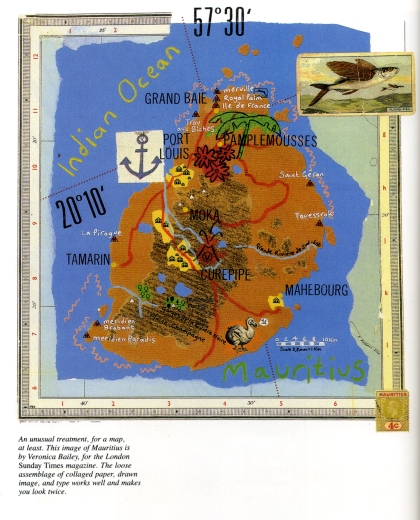
I was helping transfer books from boxes to shelves two weeks ago and came across Nigel Holmes’ Pictorial Map book. Flipped through the pages, quickly scanning for interesting material for class. Stopped. Went back a few pages. Screamed when I saw a map of Mauritius–my island—in NIGEL HOLMES’ book!!! Read the caption. Thought “Hold on, is this for real?” Yes, it was. Here is the map. Now, this looks dated but for once, I will just enjoy the fact that my island was showcased in a design book and not analyze some of the deficiencies of the map.

Filed under: Uncategorized
I cannot believe that a year went by so fast.
This was a good semester, a bit smoother than last semester.
A year ago, my coworkers told me that teaching gets easier with time. I thought “yea, you are trying to reassure me. that’s nice…” but they were right.
I love teaching. I love it even more when I feel the energy and dedication coming from the students. The metaphor of a relationship is perfect when talking about the professor/student relationship. I always say that it is a two way relationship. Communication is crucial and empathy even more. Obviously, I can’t read minds. I would (maybe) like to but I can’t. I find it helpful when students share their concerns and struggles with me. I also found that sharing my honest opinions about class progress at different stages of the semester to be refreshing. I learned that from Jack Sprague. We have to be honest. Some people are cut for this more than others. I would never make a great accountant nor would I be a successful politician. (don’t get me wrong, some things about academia do get political…)
One thing I have to say though is that a dedicated and critical thinker (with some formal skills) can kick an exquisite yet lazy form maker’s ass. I have no tolerance for excuses. I have no tolerance for people who just sit there and never reach for something better.
I am not even sure what the purpose of this blabbering is…*sigh. I guess that’s why it is titled reflections. Reflections do not have to make sense…right?
A year. A year older
I question people’s perception of age.
What does it mean when people I meet are shocked that I am a full-time tenure track college professor? What does it mean when they say “you look so young”
Does “you look so young” = “really? are you even good?”
I do look young. and. I am young(er) than the typical full-time tenure track college professor. Does it matter? Does age affect credibility? Does the fact that I look and am younger affect people’s perception of me as a professor?
Yes. Of course.
It can go either way
1. “Gawd, she looks like she is 16. What can a 16 year old teach me that I do not already know? But on the other side, she must be easy…”
2. “Wow, how can someone so young be a full-time assistant professor? Maybe she is knowledgeable…”
I like #2 but really it has not been an issue other than the constant shock in people’s eyes
I love design too much to hurt its growth and the upcoming designers!
++++
I guess I am making it a trend to reflect on my semesters
Filed under: Uncategorized
I saw this on my old blog and think it needs reposting. dated March 31, 2008
I handed in my first thesis draft this morning. I never slack. or procrastinate too much when it comes to school but lately, ever since I was faced with the challenge of writing a thesis document, I have been. I have done everything…from staring at my room ceiling and noticing immense cracks that I have never seen before to going on neighborhood walks with my roomate (and if you know me, I never exercise).
The final thesis becomes more than a manifestation of the designer’s thoughts; of my thoughts. It becomes the designer. It becomes me. Bound, labeled yellow and bar coded, I will join my other classmates on the thesis rack at the Design Library. How frightening is this? I have been working on my thesis for a year now…well…in the end the final thesis becomes an accumulation of thoughts, interests and conversations exchanges carried on over my past two years of graduate school. Maybe even accumulation and negotiation of meaning based on events that happened over the past 24 years of my life. And if that is so, if the meaning of the work I am producing has been/is influenced by my undergraduate, graduate education, casual conversations I have had, and events that i have been part of all my life; if meaning and experiences are influenced by past experiences, what does that mean? How does anyone assign value to work which is not based on scientific numbers but partly personal?
The thought of having my work take such an official book format, accessible to many, frightens me. I am aware that my thesis will never read exactly the way I want it to other people because a lot of it is personal and meaning is never fixed. I should thus not fret but close my eyes and write my heart and mind out. I should not let myself get overly paranoid about whether I will be understood or not. I will pick the words, create the conditions that will support the overall understanding of the value of my thesis. Of course, the readers will construct their own meaning.
Filed under: Uncategorized
Photo Credit: Conrad Taylor
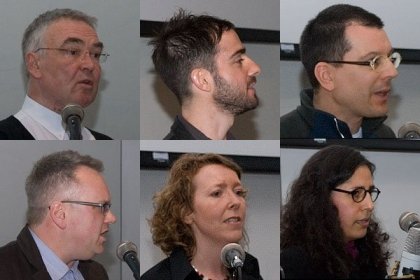
(Presenters > photo 1: Robert Harland, Paul Stiff, Colette Jeffrey, Jonathan Rez, Sunita Yeomans, Eric Kinde)
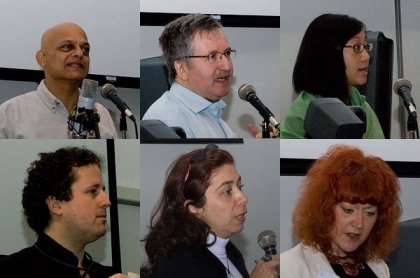
(Presenters > photo 2: Yateendra Joshi, Max Gadney, David Farbey, Carla Galvão Spinillo, Me)
I was extremely pleased with the quality of presentation and discourse at the IDC2009.
I have always had an issue with conferences holding concurrent presentation sessions. I can never go to all the ones I am interested in and get stuck listening to the ones that are not relevant to my interests. Sounds shallow, I know. I should open up to other areas of research interest. Actually, no. I should not. I should focus on my own. The other presentations could be valuable, to others I am sure. It only becomes valuable to me if I can apply it to my interest. Oh and, I despise presentations that showcase students’ work without explaining how these projects relate to the conference theme. It is one thing to show me your students’ work and yet another to tell me how it relates to the larger system that is academia. And, I also prefer it when presenters stay true to their abstracts. The articulate word crafter can put together a wonderfully sounding abstract that he/she does not follow through on in the actual presentation.
Back to the IDC2009.
The structure was well thought out.
Everyone gathered in the lecture room and all the presentations were given in that same room.
Presentations addressed both the visual and the technical writing part of Information Design.
Actually, technical writing, I found out, can be visual as well. Technical writing can be concrete. If you can see what you read, it is concrete.
Jonathan Rez gave an enlightening overview of wayfinding/thingfinding/wayshowing/thingshowing. I wish he had time to go deeper into the subject. He definitely had me thinking and thinking and I’m still thinking.
Paul Stiff addressed designing for action. He talked about print production versus print reception.
Rob Waller talked about his good guidance wish list: memorable, action-oriented, flexible, holistic, evidence-based, intuitive, user-centered, realistic, teaching through showing.
Max Gadney talked about patterns and trends in news graphics. He questioned systems versus objects. He showed and talked about information graphics on the printed page, online and in videos. BIOMIMICRY: innovation inspired by nature.
Borries Schwesinger’s presentation was about forms as interaction tools. His talk, however, displayed and explained the path it takes one to get to forms online. While interesting, I was dying to hear more about the form design itself more. How are forms interaction tools?
I do not have notes on the other presentations either because I was too busy thinking or I was in pain from pinching my nerves from a 10 hour flight and could not look down at my notepad.
The panel discussion was extremely interactive and intelligent. The conversation revolved around interaction design, information design, user-experience and (hehe) academia!
I will post a video of the panel discussion after I edit it.
Filed under: Uncategorized
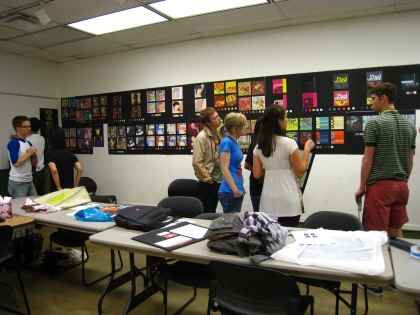
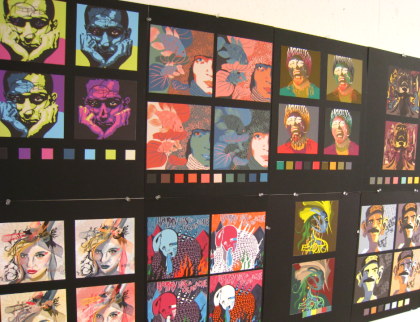
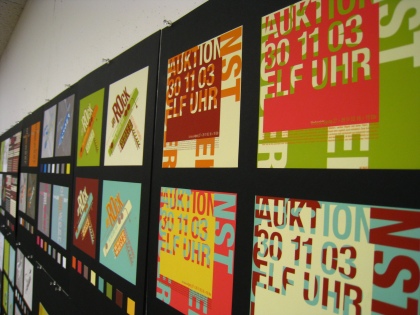
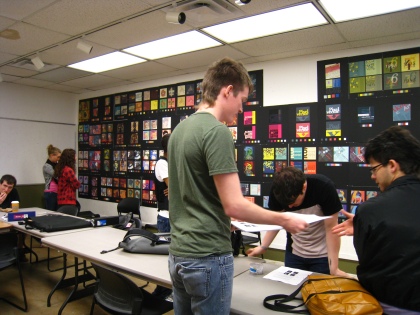
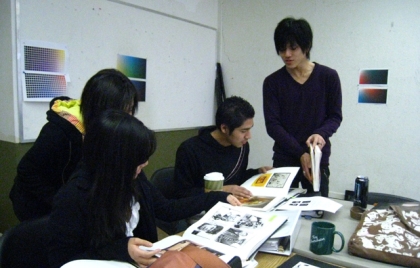
Students use color in different amounts to control space and mood
Filed under: Uncategorized
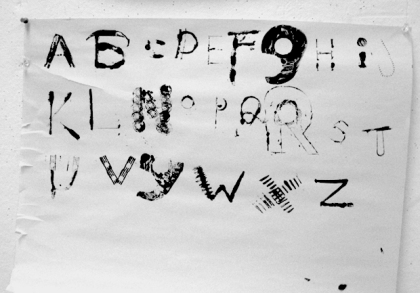
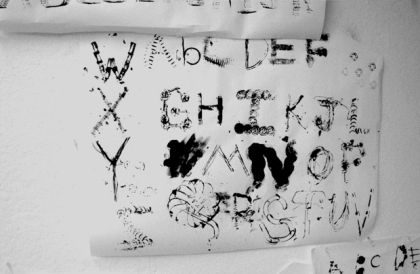
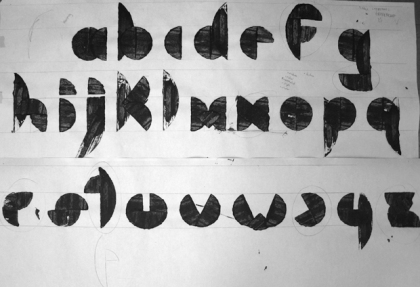
Every single choice that a designer makes affects / sets up the conditions for user experience.
Even the slightest change from a curvilinear to a more rectilinear stylization affects how people perceive and process.
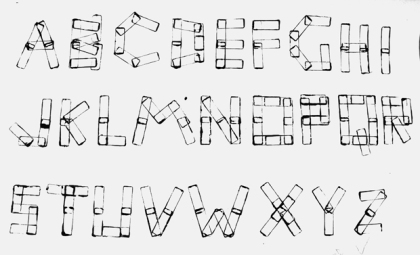
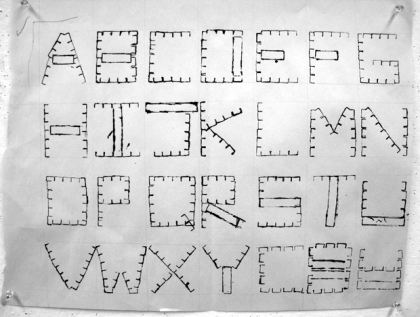
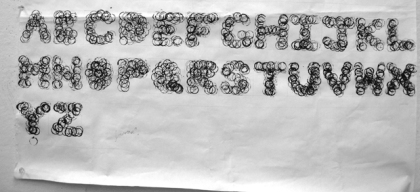
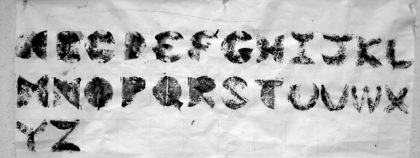
Students in their second communication design semester are encouraged to question how visual language has implications…
and of course they get to have ‘fun’ with form…
(andrew bui)
(melissa stammer)